How to prepare your site for machinery wet hire
Machinery wet hire gives you equipment with an experienced operator, but the site still needs to be ready for productive work. Delays often come from unclear access, missing plans, unidentified services or nowhere to place excavated material.
A clear brief and a prepared work area help the operator select the right machinery, attachments and truck support before arriving. This is particularly important for residential projects where access and loading space may be limited.
Define the work before choosing equipment
Start with a clear description of what needs to be completed. This may include site cuts, trenching, drainage excavation, concrete removal, retaining wall preparation, material spreading or general residential earthmoving.
Provide approximate dimensions, depths and quantities where possible. Plans, engineering details and marked-up photographs can help explain the required levels and the relationship between different stages of the project.
For broader excavation scopes, review our site cuts and residential earthmoving services. A defined scope makes it easier to determine whether the work requires a compact excavator, larger excavator, skid steer loader, micro loader, tipper or a combination of machines.
Measure the full access route
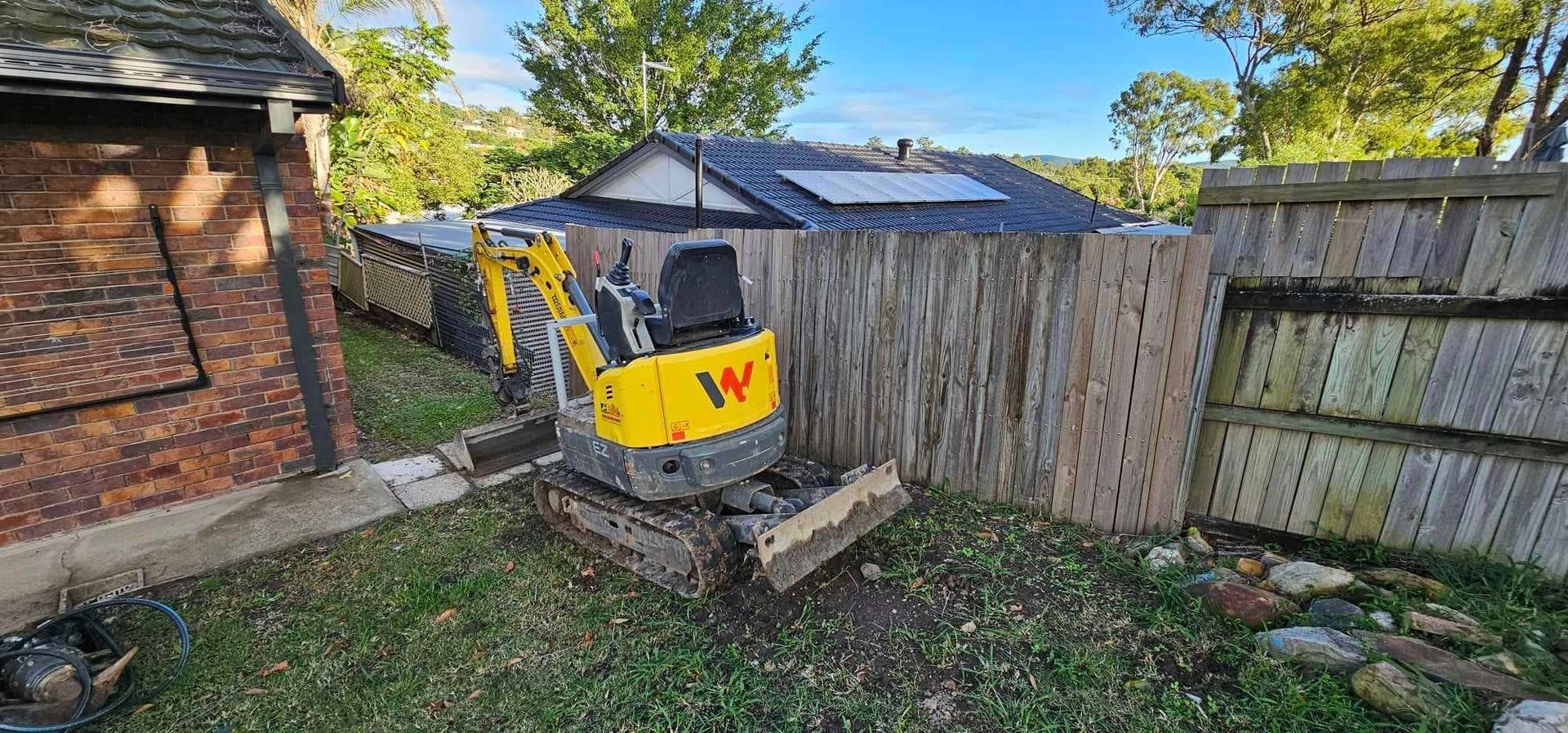
Access measurements should cover the entire route from the street to the work area. Check gates, side paths, doorways, carports, eaves and the turning space available once machinery reaches the site.
Look for low branches, power lines, air-conditioning units, water tanks, steps and changes in ground level. A machine may fit through the narrowest opening but still be unable to navigate a tight corner or steep transition.
Restricted properties may benefit from compact excavators and specialty micro loaders. Learn more about our tight-access excavation capabilities when conventional machinery cannot reach the work area.
Identify underground and overhead services
Before excavation begins, the work area should be checked for electrical, water, gas, telecommunications, stormwater and sewer services. Provide any available service plans and explain where private lines, irrigation or recently installed utilities may be located.
Overhead power lines and communication cables also affect safe machinery movement. Their location should be included in site photographs and discussed before equipment is transported.
Do not rely only on memory or visual assumptions. Existing plans and appropriate service-location processes should be used to clarify the site before digging.
Decide what will happen to excavated material
The operator needs to know whether soil, rock, concrete or vegetation will remain onsite, be spread elsewhere or be loaded into trucks for removal. Different materials may need separate handling, and unsuitable material can increase the number of truck movements required.
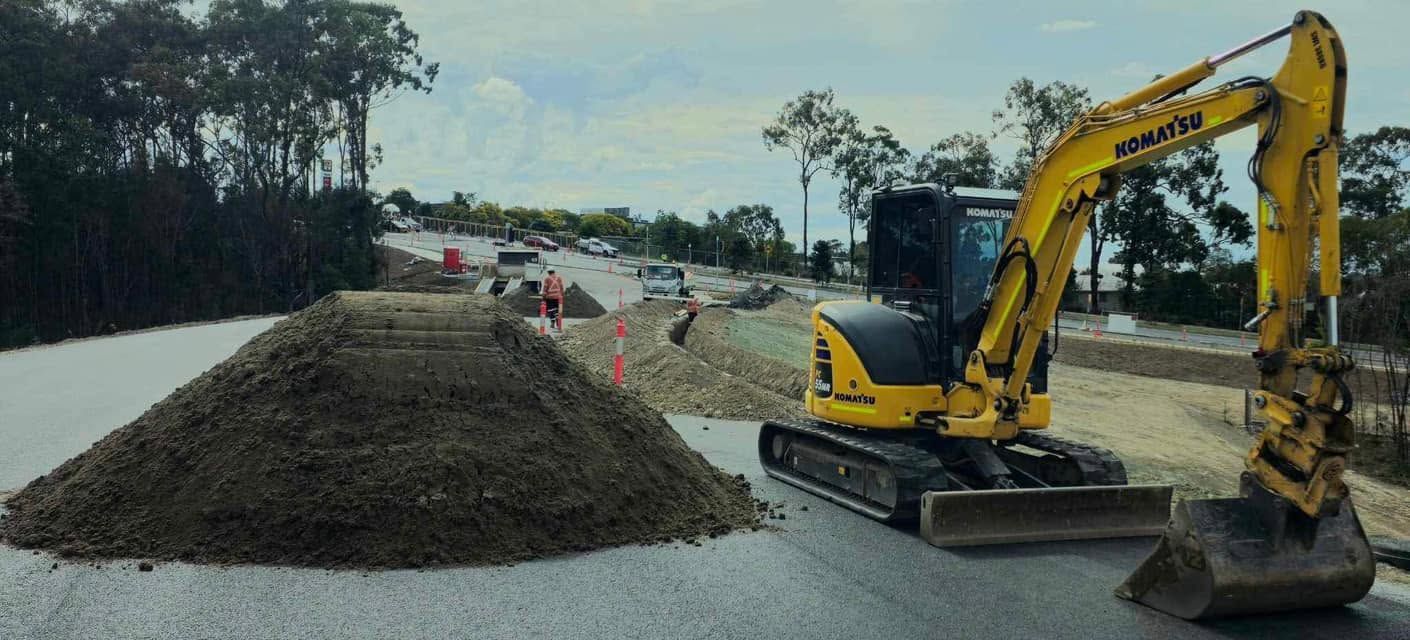
Choose a stockpile area that does not block machinery access, drainage routes or later stages of construction. On small sites, staged truck removal may be more practical than storing a large volume onsite.
Bren-Ten can coordinate excavators, skid steers, micro loaders and tipper trucks through its machinery wet hire service, allowing excavation and material movement to be planned together.
Prepare a safe loading and parking area
Trucks and transport vehicles require suitable room near the property. Check driveway capacity, roadside parking, street width, overhead branches and the ability of vehicles to enter, exit or turn without blocking traffic.
Move cars, trailers and other obstacles before the scheduled arrival. Inform neighbours where shared access or temporary disruption may occur, particularly when trucks need to reverse or load near a boundary.
If the site cannot accommodate direct truck loading, the project may require smaller equipment to move material to an accessible loading point.
Clear the work area without removing essential markers
Remove furniture, garden items, loose materials and other movable obstacles from the work zone. Mark structures, trees or features that must remain protected.
At the same time, do not remove survey pegs, level marks or other reference points needed to complete the work accurately. Plans and site markings should be available to the operator when work begins.
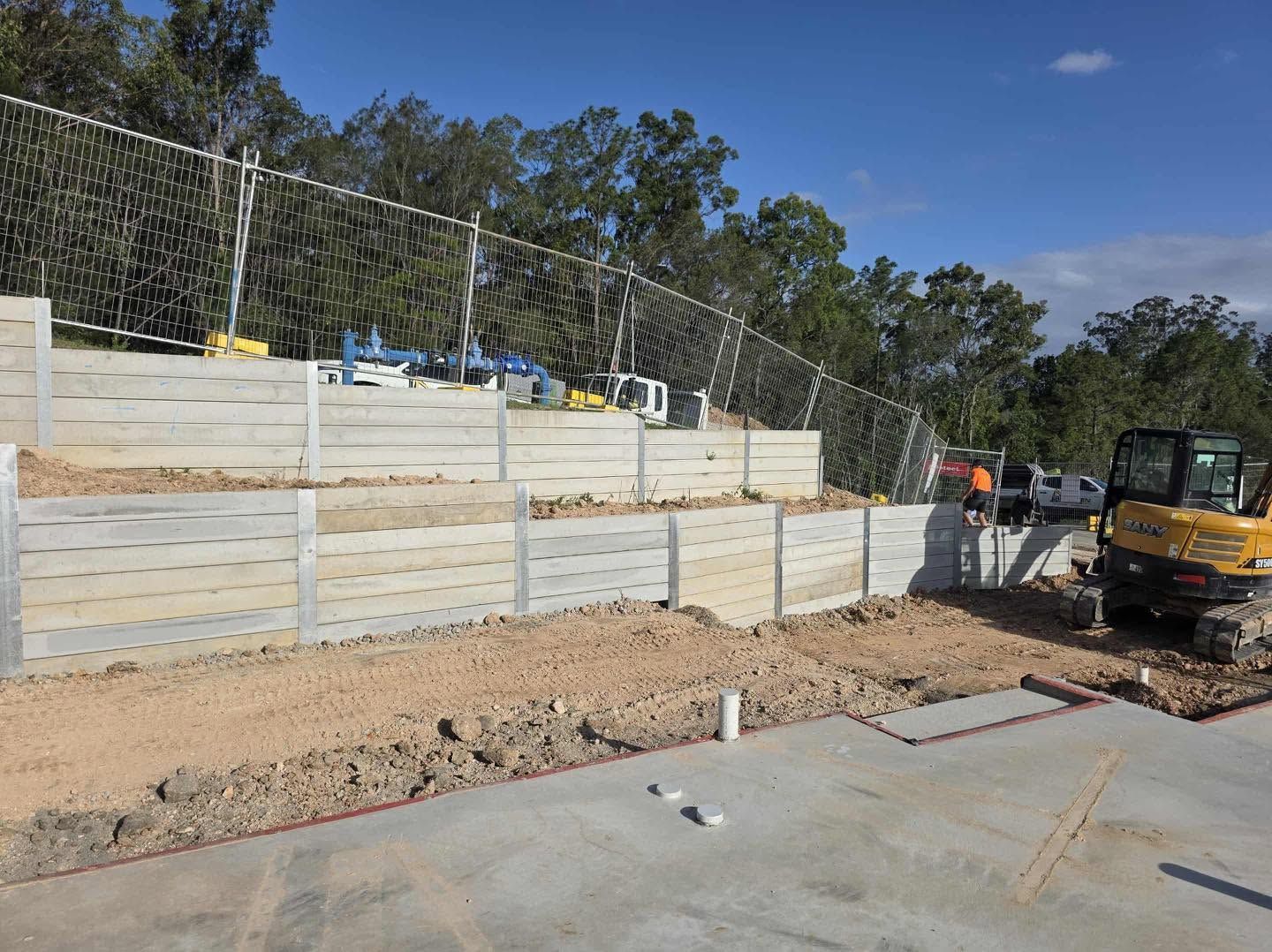
Where excavation supports a retaining wall or drainage project, confirm the required lines and levels before machinery starts. Our retaining wall and hardscaping services can include coordinated site preparation and material handling.
Consider weather and ground conditions
Heavy rain can affect access, soil stability, loading and the quality of finished levels. Soft ground may also restrict truck movement or cause avoidable damage to lawns and unsealed areas.
Discuss known drainage issues and areas that remain wet after rainfall. Temporary protection, a revised sequence or different equipment may be needed depending on the conditions.
For projects involving pipe routes, pits or runoff management, explore our stormwater drainage and trenching services.
Confirm attachments and supporting machinery
Different tasks require different buckets, augers and loading equipment. Provide details about trench width, hole diameter, excavation depth and material type before the booking so suitable attachments can be arranged.
A single excavator may be sufficient for a small open job. Larger or restricted projects may be more efficient with a loader, truck or second machine supporting the main excavation.
Coordinating the complete equipment combination early reduces idle time and avoids transporting machinery that cannot complete the required task.
What to send when requesting wet hire
A useful enquiry includes the site location, work description, expected depths and quantities, access measurements, photographs and preferred timing. Attach plans, engineering details and service information when available.
Also explain what materials are onsite, whether spoil needs to be removed and what work will happen immediately before or after the machinery hire. This context helps the contractor recommend a practical sequence rather than quoting one machine in isolation.
Preparation helps wet hire deliver better value
Wet hire is most effective when the operator arrives with a clear scope, suitable equipment and a workable site. Preparing access, services, material handling and loading areas allows more of the booked time to be spent completing the project.
Explore Bren-Ten's machinery wet hire options for residential earthmoving, hardscaping and selected light civil work.
Planning a job in Southeast Queensland? Contact our team with your plans, photos and access details to discuss the machinery and support your project requires.