How to choose machinery for tight-access excavation
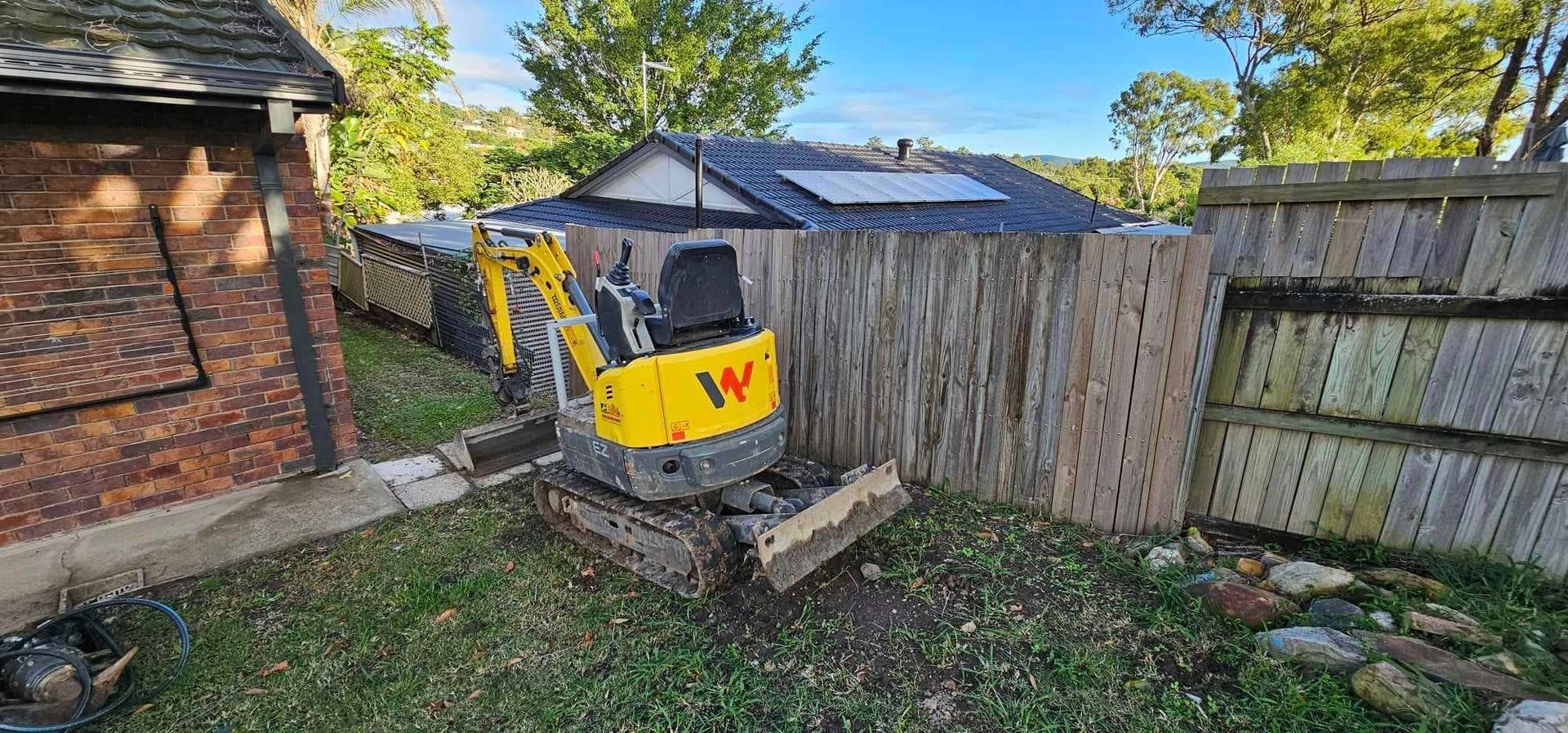
Tight-access excavation is not simply a smaller version of a standard earthmoving job. Narrow gateways, side paths, low clearances, existing structures and limited loading space can all affect how the work needs to be planned.
The right machine must fit the site while still providing enough digging depth, lifting ability and productivity for the task. Choosing equipment based only on machine weight can lead to access problems, unnecessary ground disturbance or slow material handling.
Start with accurate access measurements
Measure the narrowest point between the street and the work area. This may be a gate, side path, doorway, fence opening or gap between the house and boundary. Record the width at ground level and higher points because eaves, hot-water units, air-conditioning systems and fence posts can reduce the usable clearance.
Height also matters. Check carports, balconies, clotheslines, tree branches, power lines and other overhead obstacles. A compact machine may fit through a gate but still be unable to pass beneath an awning or rotate safely once inside.
Photographs and a simple sketch can help an operator assess the route. For specialist equipment options, view our tight-access excavation services.
Match the excavator to the digging task
Small excavators are useful for trenches, footings, drainage, landscaping preparation and detailed excavation around established properties. However, the smallest machine is not always the best option. Digging depth, soil type, attachment requirements and the volume of material all need to be considered.
A 1.7t or 1.8t excavator may suit restricted residential access, while 3t to 5.5t machines can provide greater reach and output where the route and work area allow. Larger equipment may reduce operating time, but only when there is enough room to work safely and load material efficiently.
For projects involving new building pads, bulk excavation or changes to property levels, our site cuts and residential earthmoving service explains how equipment can be matched to the wider scope.
Consider how material will leave the work area
Digging is only one part of an excavation project. Soil, concrete, rock and other material need to be moved from the excavation area to a truck, stockpile or another part of the property.
On open sites, an excavator may load a tipper directly. On narrow residential properties, a compact loader or micro loader may be required to shuttle material through the access route. Bren-Ten's Wacker Neuson micro loaders are suited to restricted areas and can fit through a doorway while retaining useful lifting capability.
The distance between the excavation and loading point should be considered during planning. A long, narrow route can make material movement the most time-consuming part of the job, even when the excavation itself is straightforward.
Check ground conditions along the access route
Lawns, paving, concrete, soft ground and sloping paths respond differently to machinery traffic. The contractor needs to know what surfaces the machine will cross and whether protection, temporary ramps or another method is required.
Wet or unstable ground can reduce traction and increase the chance of surface damage. Tight corners and changes in level may also prevent a machine from reaching the work area, despite having enough nominal width.
Remove movable obstacles before work begins, but do not dismantle permanent fencing or structures until the access method has been confirmed.
Select attachments for the work required
Excavators can use different buckets, augers and other attachments to perform specific tasks. A narrow trenching bucket may suit pipework, while a wider bucket can be more efficient for stripping or shaping. Long augers may support deeper post-hole or footing work where the ground and access are suitable.
Attachment selection should be discussed before the machine arrives. The operator also needs to know about buried services, proposed depths, spoil type and any structures close to the excavation.
Projects involving drainage trenches, pits or pipe routes may also require our stormwater drainage and trenching services.
Plan for trucks and street access
Even when compact equipment completes the work behind the house, trucks may still need safe access at the front of the property. Consider driveway width, road conditions, parking restrictions, overhead trees and space for loading.
The truck size should suit the material volume and available access. Smaller tippers may be practical for constrained suburban sites, while larger trucks can reduce trips when loading space and road access allow.
Coordinating excavators, loaders and trucks through one machinery wet hire provider can make the sequence easier to manage.
Provide clear information before requesting a quote
Useful information includes the site address, access width and height, photographs of the route, the approximate work area and a description of the required excavation. Include planned depths, material types and whether soil or demolished material needs to be removed.
Plans, engineering details and service locations should also be supplied when available. More information at the beginning allows the contractor to identify likely machinery, attachments, transport and material-handling requirements.
The best machine is the one that suits the entire site
Tight-access earthmoving depends on more than fitting a machine through the gate. The equipment must reach the area, complete the required work, move the material and leave the property without creating avoidable disruption.
Explore our tight-access excavation options for restricted residential and construction sites.
Need help choosing machinery? Contact our team with access measurements, photos and your project scope for practical guidance and a tailored quote.